cat-a-hack
cat-a-hack is a prototyping board for PC or uC to transceiver isolation.
Ham radio transceivers will interface with PCs or other equipment in two ways:
- via the CAT protocol for control
- via a line-level audio port for audio I/O
In order to avoid ground loops, galvanic isolation between the PC and transceiver is often implemented in an interface device, such as the Tigertronics SignaLink. This device is usually connected to the PC via USB and has an USB-to-UART driver (usually a FT232x chip) and a USB audio interface (usually a PCM29xx chip), both managed by an USB hub IC.
cat-a-hack is more aimed towards the hacker power-user, and does a few things differently:
- cheaper, about 50 euro of parts for the fully loaded board
- three separate grounds (audio, UART, transceiver), in case the controlling and processing devices are separate
- FTDI chip is optional; a pin header exposes the UART interface if the user already has a FTDI cable or uses a MCU with UART support.
- no built-in audio interface; everybody has a line level input and output, or otherwise may use other ADC/DACs, no need to include it on the board
- customizable audio jack ports; jumpers for OMTP/CTIA, left/right channel selector, 1/2 port selector
- soldering area for customization
NOTE: The current revision has an issue with the choice of RS232 line driver. The board will work only with TTL-level CAT ports.
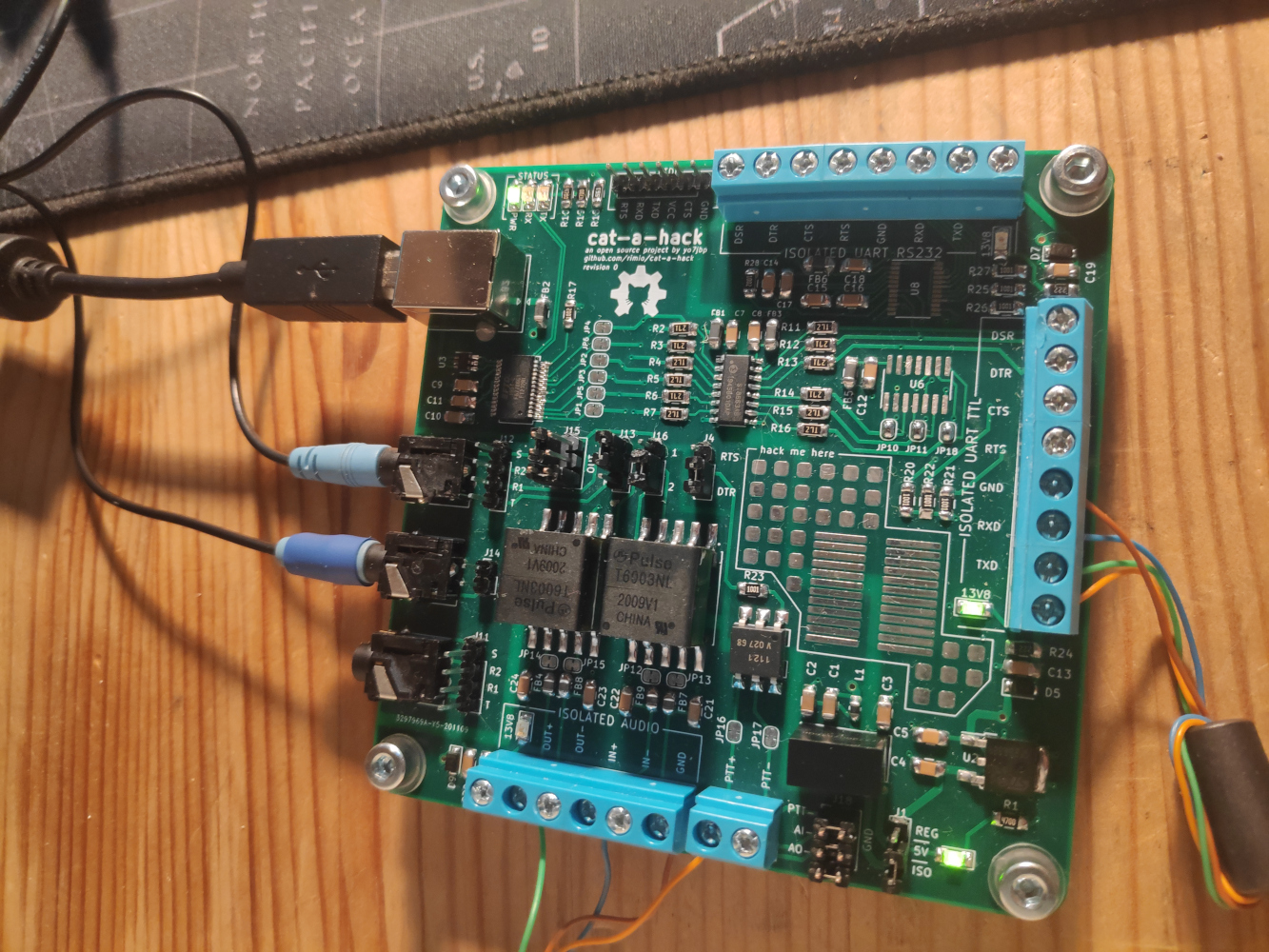
Photo of a populated board:
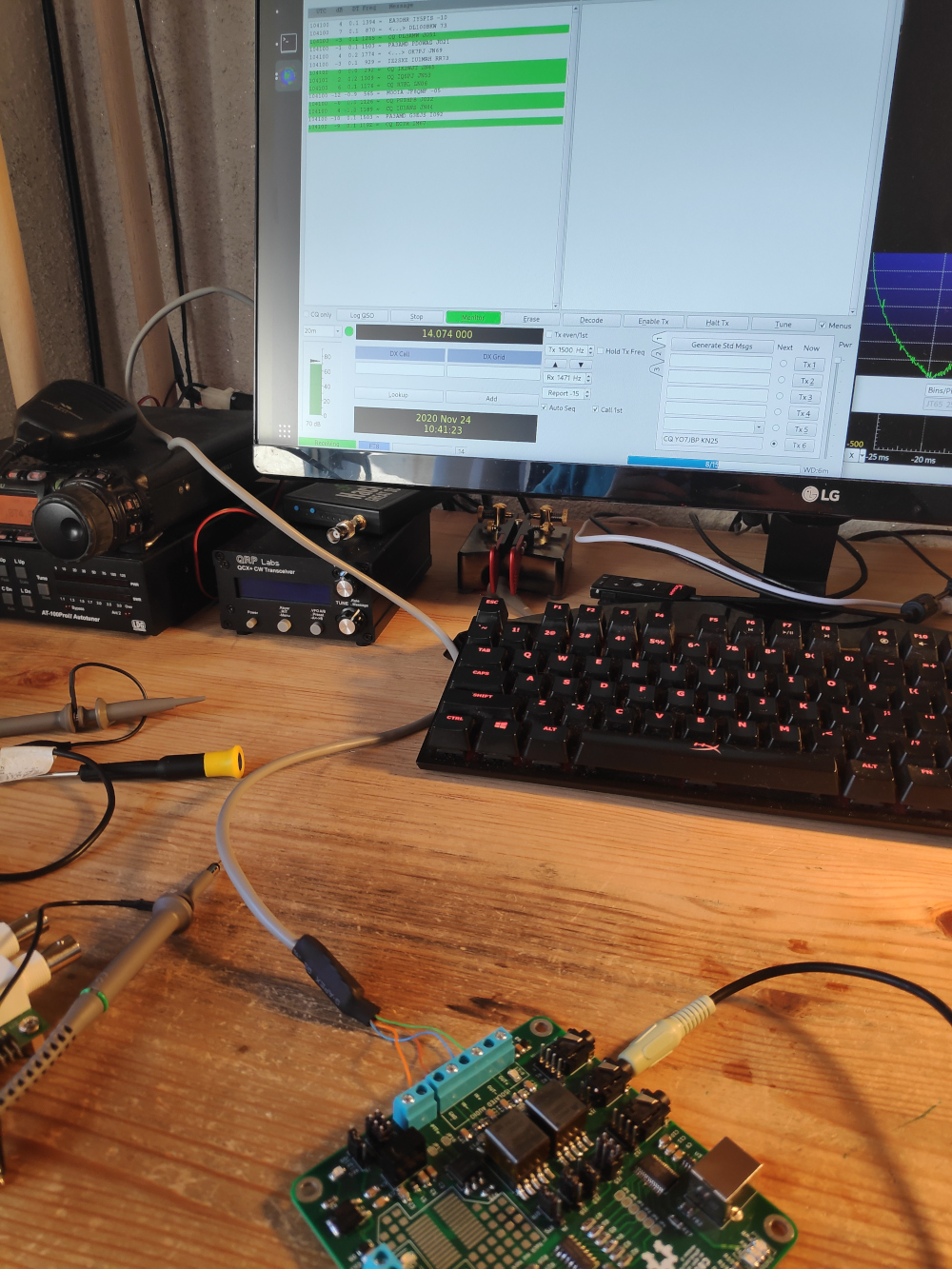
Connected to a Yaesu FT-857, working FT8 on 20m: